Electric vs Manual Pallet Jack Guide 2026
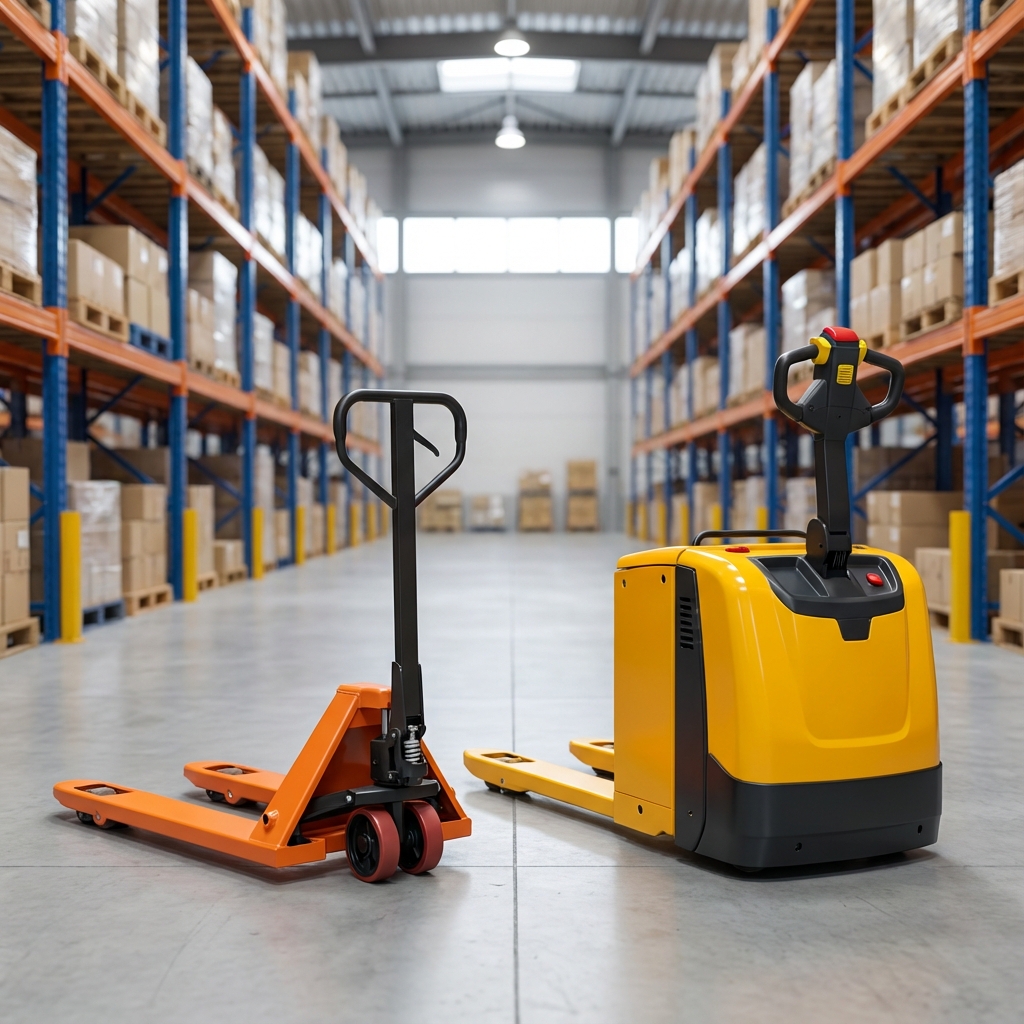
The wrong pallet jack usually shows up as wasted walking time, tired operators, and loads that move slower than the rest of the building. A manual pallet jack is still the most economical answer for short, light moves. An electric pallet jack becomes the better buy when distance, frequency, and load weight start compounding every shift.
This guide compares the two side by side so you can choose the right type for your dock, warehouse, or retail backroom.
Quick comparison table
| Factor | Manual pallet jack | Electric pallet jack |
|---|---|---|
| Typical price | $300 to $600 | $3,000 to $8,000+ |
| Capacity | 2,500 to 5,500 lbs | 3,300 to 6,000+ lbs |
| Travel speed | Operator pace | Powered travel, often 3 to 5 mph |
| Best distance | Short, frequent turns | Medium to long travel routes |
| Operator fatigue | Higher | Much lower |
| Maintenance cost | Low | Moderate |
| Best fit | Small warehouse, light-duty use | High-volume shipping, multi-shift work |
What is a manual pallet jack?
A manual pallet jack uses hand steering and a hydraulic pump to lift the forks a few inches off the floor. It is simple, reliable, and inexpensive, which is why it remains common in receiving lanes, retail storage, and smaller warehouses.
Strengths of a manual pallet jack
- Lowest purchase cost for moving palletized loads
- No battery charging or power setup
- Easy to keep as a backup unit
- Good for short moves, staging, and low daily volume
Limits of a manual pallet jack
- Operators provide all travel force
- Longer routes add fatigue quickly
- Throughput drops when the building relies on high cycle counts
- Heavy loads on rough floors feel harder than the spec sheet suggests
If you mainly handle short floor-level moves, start with manual pallet trucks and compare fork length, wheel material, and capacity before you buy.
What is an electric pallet jack?
An electric pallet jack uses battery power to drive and, in many models, power the lift function. This reduces push-pull effort and improves repeatability when one operator moves heavy pallets all day.
Strengths of an electric pallet jack
- Faster movement over medium and long distances
- Lower operator strain on heavy loads
- Better fit for shipping, outbound, and cross-dock work
- Higher productivity in multi-shift operations
Electric vs semi-electric
Some buyers compare a fully powered jack with a semi-electric or powered-lift-only unit. The difference is simple:
- Semi-electric: powered lift, manual travel
- Fully electric: powered lift and powered travel
When route length matters, fully powered equipment inside electric pallet trucks usually delivers the bigger productivity gain.
Head-to-head: cost, capacity, and labor impact
Price
Manual pallet jacks often land between $300 and $600 for standard warehouse duty. Electric pallet jacks usually start around $3,000 and can exceed $8,000 once battery package, charger, platform style, and duty cycle increase.
Load capacity
Most manual units work well at 2,500 to 5,500 lbs. Electric units commonly handle 3,300 to 6,000 lbs and maintain speed more consistently under load.
Speed and efficiency
A manual jack is fine when the route is short and congestion is low. Once operators are walking long aisles, loading trailers, or moving dozens of pallets per shift, the travel time difference becomes obvious.
Operator fatigue
This is usually the deciding factor. A manual jack costs less to buy, but it costs more in labor fatigue when routes are long or loads are dense. That is why electric pallet jack demand is strongest in larger DCs and high-volume shipping rooms.
Maintenance
Manual units need wheel, seal, and hydraulic service. Electric units add batteries, controls, and drive components. If you already follow a maintenance schedule, review pallet jack maintenance before committing to a larger fleet.
When to choose manual
Choose manual if your operation looks like this:
- Small warehouse or backroom
- Low daily pallet count
- Short travel distances
- Budget-sensitive startup or overflow use
- Need for a simple backup unit that always stays available
An example like PM5-2048 helps show the value of a durable manual platform for common warehouse work.
When to choose electric
Choose electric if your operation looks like this:
- Large warehouse or long aisle travel
- Frequent trailer loading and unloading
- Heavier or more frequent loads
- Multi-shift shipping schedules
- Pressure to reduce fatigue and speed up pallet moves
A product such as EPT-2748-30 illustrates where a fully powered electric pallet jack starts to make sense.
Need help choosing? Request a free quote and send your route length, load range, and estimated daily pallet moves.
Top picks from PalletCorner by use case
| Use case | Recommended direction | Why it fits |
|---|---|---|
| Retail backroom and short receiving moves | Manual pallet trucks | Low cost and simple operation |
| Shipping room with repeated dock traffic | Electric pallet trucks | Faster travel and lower strain |
| Mixed operation with occasional heavy peaks | One manual unit plus one electric unit | Backup coverage and budget control |
| Training new operators | Start with how to use a pallet truck | Better safety and fewer handling mistakes |
Buying questions that matter more than brand names
Before you search “pallet jack for sale,” answer these questions:
- How far does the average pallet travel?
- How many pallets move in a normal shift?
- What is the heaviest routine load?
- Are ramps, dock plates, or rough floors part of the route?
- Do you have charging space and battery maintenance support?
Those five answers usually make the manual vs electric choice much clearer than the product brochure does.
Compliance and training
Powered pallet jacks fall under OSHA 29 CFR 1910.178 because they are power industrial trucks. That means operator training, equipment checks, and safe-use procedures matter. Manual pallet jacks have lower regulatory burden, but they still require safe handling habits and inspection routines.
FAQ
Is an electric pallet jack worth the extra cost?
It is usually worth it when operators move pallets long distances, handle heavy loads, or work high daily volume. The labor savings often matter more than the higher purchase price.
How much does a manual pallet jack cost in 2026?
Most standard manual pallet jack models cost about $300 to $600, depending on fork size, wheel material, and capacity.
How much does an electric pallet jack cost in 2026?
Most electric pallet jack models start around $3,000 and can run above $8,000 with larger batteries, higher capacities, or rider-style options.
Which pallet jack is better for a small warehouse?
Manual pallet jacks are better for many small warehouses because they cost less and work well on short routes. Electric units become better when the building grows or daily moves increase.
Where can I find a pallet jack for sale with real support?
Start with a supplier that can explain capacity, fork dimensions, charger needs, and replacement parts. PalletCorner can help compare manual pallet trucks, electric pallet trucks, and relevant product options based on your workflow.
If your team is still debating cost versus productivity, compare your route length and daily pallet count before you buy. Then browse pallet trucks, review how to use a pallet truck, or contact PalletCorner for a side-by-side quote.